The 10-Year Health Plan Interim Explainer – What’s Happening and How are ICBs Changing?

The Plan was clear about three major shifts across health services:
- From hospital to community
- From analogue to digital
- From sickness to prevention
What does this mean for you?
Across northeast London there is already considerable work underway which supports the delivery of these three shifts and transforms care for patients. Below are some changes you may be noticing, or might notice soon:
- A Neighbourhood Health Service – shifting care away from hospitals into local communities, with new Neighbourhood Health Centres open long hours and offering joined-up NHS, council, and voluntary services.
- Digital transformation – moving to a single electronic patient record and expanding the NHS App as the main patient access point, supported by AI tools, digital therapies, and virtual wards.
- Care closer to home – supporting people to stay at home for longer, avoid unnecessary admissions, and return home quickly when safe, backed by integrated neighbourhood teams and community-based pathways.
- Prevention and tackling inequalities – focusing on reducing long-term conditions, improving screening and vaccination, and narrowing the health gap between rich and poor areas, while promoting healthier childhoods.
- Specialist and mental health support – expanding advice and referral management, creating women’s health hubs, improving local mental health provision to cut out-of-area placements, and boosting checks for people with severe mental illness or learning disabilities.
ICBs (Integrated Care Boards)
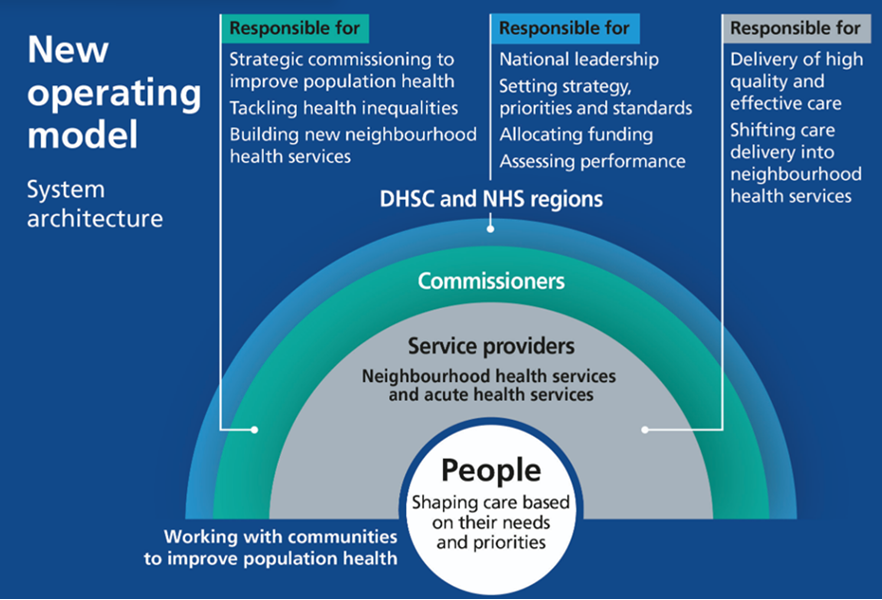
Following the Plan’s new “system architecture”, ICBs will act as the main organisation responsible for planning and coordinating health services in their area. They will oversee how funding is used, lead the redesign of care pathways, and focus on improving overall health outcomes while reducing inequalities across the population.
Barking and Dagenham falls under the NEL (North East London) ICB, who is working hard to make the changes mentioned above a reality.
The seven NHS regions will remain in place and will be responsible for performance management and provider oversight. They will follow a rules-based approach, using new diagnostic tools to identify and address the causes of poor performance, supported by a new system for dealing with serious failures.
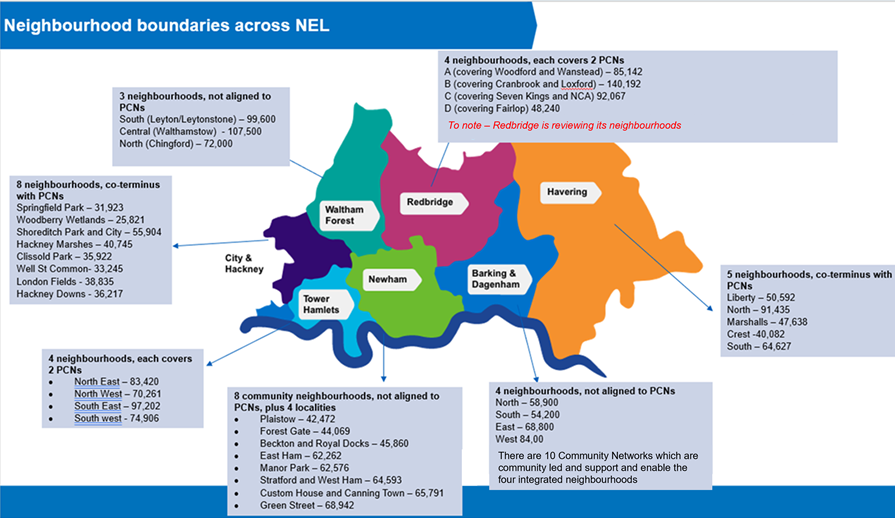
Courtesy of NHS NEL ICB
The 10 Year Health plan also proposes a new operating model for ICBs, providers and the region. It sets out a simple hierarchy of the Department of Health and Social Care, Commissioners and Providers - all accountable to government, with responsibilities clarified and with patients at the very heart.
As part of this new model, the Plan also outlines proposals for Healthwatch to be abolished. We are not yet clear on timescales for this, but we are really clear that user engagement and patient voice will continue to be central to how you shape the future of health services alongside the NEL ICB. For now, Healthwatch B&D continues to work with the NEL ICB whilst the Government’s plans become clearer.
Courtesy of NHS NEL ICB
If you’d like to know more about the NEL ICB, and what it can do for you, visit their Barking and Dagenham section here.
We always encourage the residents of Barking and Dagenham to get in contact with us. We’d be happy to hear your feedback and share any concerns about the proposed changes